1
/
of
2
Muscari
Muscari
MINIMUM ORDER QUANTITY: 5 Bunches (50 stems)
SPRING MUSCARI—10 STEM/BUNCH
Novelty Spring Flowers | NOVA Floral Supply
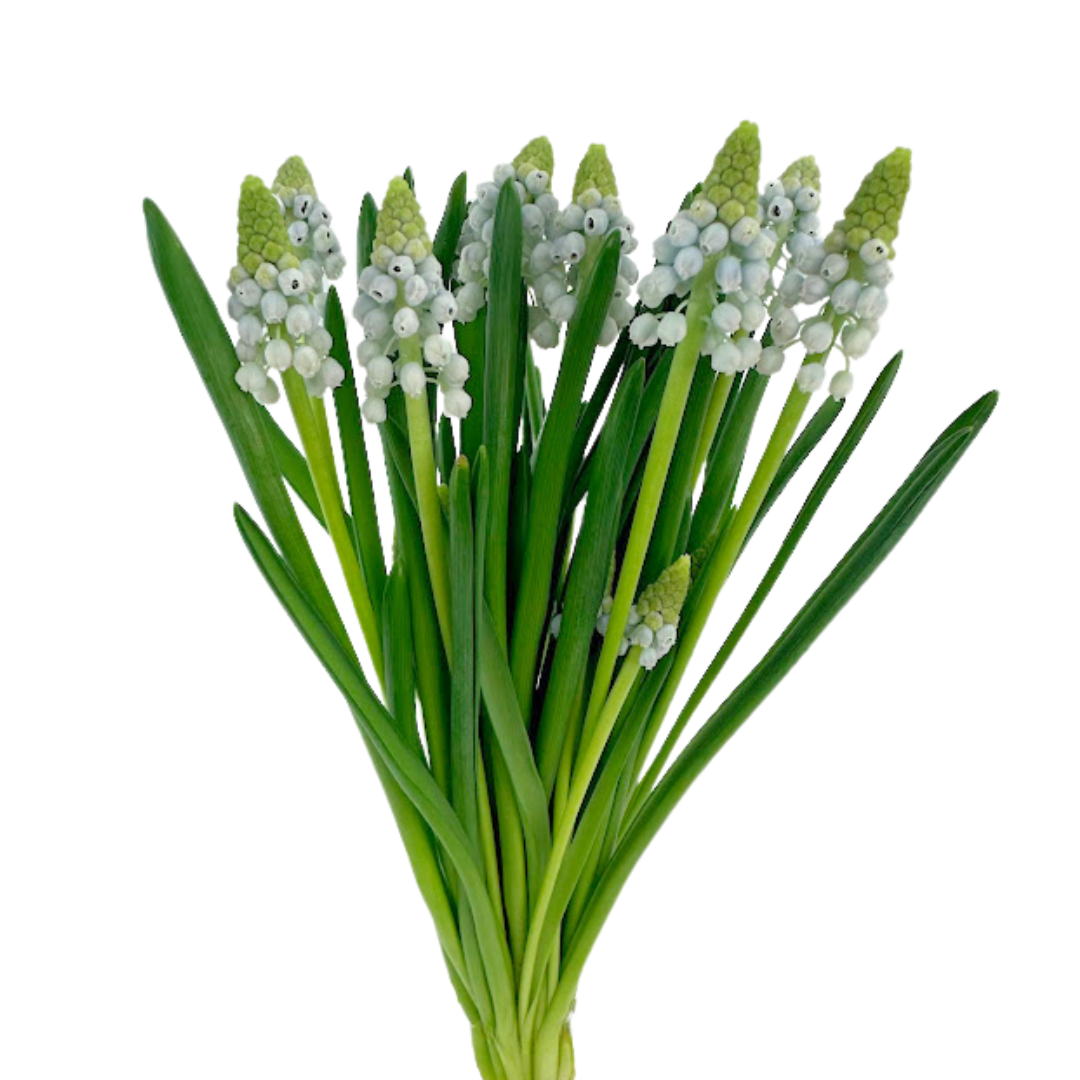
Muscari (Muscari armeniacum), commonly known as grape hyacinth, may be small, but it punches well above its weight in floral design. Known for its charming clusters of bell-shaped blooms and rich blue-purple color, muscari brings texture, movement, and unmistakable spring energy to arrangements.
Quantity
Regular Price
$15.95 USD
Regular Price
Sale Price
$15.95 USD
Delivery Calculated at Checkout
DETAILS + SPECS
DETAILS + SPECS
SEASONALITY
➜ Late Winter–Spring (Feb–Apr)
DESIGN TYPE
➜ Accent Flower, Line Flower
VASE LIFE
➜ Moderate
HEAD SIZE
➜ 1–3in
STEM LENGTH
➜ 15–30cm
CARE + HANDLING
CARE + HANDLING
➜ Muscari should be processed as soon as possible after arrival by giving the stems a fresh cut and placing them into shallow, clean water
➜ Allow 3–4 hours of hydration before designing, keeping buckets lightly filled—the soft stems can become water-logged, creating slime and bacteria
➜ Muscari performs best in fresh water arrangements and can be used successfully in floral foam when fully hydrated beforehand
➜ Handle stems gently near the base—the delicate flower clusters bruise more easily than their small size might suggest
➜ Keep arrangements cool whenever possible to help preserve the rich blue color and slow the flowers from opening too quickly
PROS + CONS
PROS + CONS
POSITIVES ➜
♡ Beautiful spring color
♡ Unique bloom texture
♡ Excellent seasonal character
♡ Highly recognizable flower
NEGATIVES ➜
✗ Short stems can limit applications
✗ Strongly seasonal availability
✗ Smaller bloom size requires thoughtful placement
✗ Constantly trying to prove size isn't everything
FAQ's
FAQ's
Are muscari sometimes called grape hyacinth?
➜ Yes, they’re commonly referred to as grape hyacinth because their tightly clustered florets resemble tiny bunches of grapes—they're not true hyacinths, but they're cherished for the same cheerful springtime charm
What flowers pair well with muscari?
➜ Muscari pair beautifully with tulips, ranunculus, daffodils, anemones, helleborus, hyacinth, and other seasonal blooms that celebrate the arrival of spring
Do florists use muscari? They're so small..?
➜ When appropriate (or requested), yes! They define the little details that make arrangements feel thoughtful—a few stems tucked throughout a design add texture, color, and a sense of season that larger flowers simply can't replicate
Is muscari fragrant?
➜ Some varieties may have a light fragrance
What colors are available?
➜ Blue and purple are most common, though white and powder blue varieties also exist
DESIGNER NOTES
DESIGNER NOTES
☆ One of spring's most recognizable flowers
☆ Incredible blue-purple color
☆ Perfect for personal flowers and smaller designs
☆ Adds seasonal charm instantly
☆ Makes arrangements feel freshly picked from the garden
POPULAR PAIRINGS
POPULAR PAIRINGS
☆ Tulips
☆ Hyacinth
☆ Ranunculus
☆ Anemones
☆ Helleborus
☆ Freesia
☆ Spray Roses
FLOWER FACTS
FLOWER FACTS
☆ Muscari belongs to the asparagus family, making it more closely related to asparagus than to true hyacinths despite its common name
☆ Each tiny bell-shaped flower opens gradually from the bottom of the cluster upward, extending the beauty of every stem
☆ Native to the Mediterranean region, muscari has become one of the first signs of spring in the floral industry